





 Send Inquiry
Digital Refractometer for Measuring Sodium Chloride in Food - HI96821
Price 31494.0 INR/ Unit
Digital Refractometer for Measuring Sodium Chloride in Food - HI96821 Specification
- Material
- ABS
- Product Type
- Digital Refractometer
- Voltage
- 220 Volt (v)
- Application
- Industrial
- Power Supply
- Electric
- Color
- White
Digital Refractometer for Measuring Sodium Chloride in Food - HI96821 Trade Information
- Minimum Order Quantity
- 1 Unit
- Supply Ability
- 3 Units Per Week
- Delivery Time
- 1 Week
About Digital Refractometer for Measuring Sodium Chloride in Food - HI96821
Digital Refractometer for Measuring Sodium Chloride in Food HI96821
The HI96821 portable refractometer converts the refractive index of a food sample to g/100 g, g/100 mL, specific gravity and Baume. These conversions are based on internationally recognized references for unit conversion. The HI96821 is ideal for the analysis of salad dressings, cheeses, condiments, canned and jarred foods, soups, brines and whey. The HI96821 is an easy to use tool for measuring sodium chloride in foods, whether on the production line or in the lab.
- Designed for sodium chloride analysis in foods
- Automatic Temperature Compensation
- High accuracy measurements in g/100 g, g/100 mL, specific gravity and Baume
Making a Standard NaCl Solution (g/100 g)
To make an NaCl Solution, follow the procedure below:
- Place container (such as a glass vial or dropper bottle that has a cover) on an analytical balance.
- Tare the balance.
- Weigh out X grams of high purity dried Sodium Chloride (CAS 7647-14-5: MW 58.44) directly into a beaker
- Add distilled or deionized water to the beaker so the total weight of the solution is 100g.
Efficient Sodium Chloride Measurement
The HI96821 Digital Refractometer provides quick and accurate NaCl readings in food samples, streamlining quality assurance processes for industrial users. Its advanced digital technology ensures repeatable results at the push of a button, reducing error and manual effort.
Durable and User-Friendly Design
Constructed from rugged ABS material, this refractometer resists damage in tough industrial settings. The intuitive interface and clear digital display make operation straightforward, while electric power supply ensures consistent performance for prolonged use.
Ideal for Indian Industry Standards
Tailored to meet the stringent requirements of food production and testing in India, the HI96821 is fit for importers, manufacturers, suppliers, and traders. Its compatibility with 220-volt supply meets local industrial infrastructure, ensuring seamless integration into existing workflows.
FAQ's of Digital Refractometer for Measuring Sodium Chloride in Food - HI96821:
Q: How does the HI96821 Digital Refractometer measure sodium chloride in food?
A: This refractometer uses digital refractive index technology to determine the concentration of sodium chloride (NaCl) in liquid food samples. Simply add a sample onto the prism, close the lid, and press the measurement button; the device quickly displays the NaCl concentration on its digital screen.Q: What types of food products can be tested with the HI96821?
A: The HI96821 is suitable for measuring sodium chloride levels in a wide range of liquid and semi-liquid food products, such as soups, sauces, brines, and pickling solutions, making it versatile for various industrial food processing applications.Q: When should I use a digital refractometer for sodium chloride testing?
A: Use this device during any stage of food production where salt content requires monitoring-such as ingredient mixing, quality control checkpoints, or final product verification-to ensure regulatory compliance and consistent taste profiles.Q: Where is the HI96821 Digital Refractometer typically used?
A: This refractometer is commonly found in food processing plants, quality control laboratories, and industrial kitchens, especially within companies involved in manufacturing, importing, supplying, or trading salty food products in India.Q: What is the process for operating the HI96821 Digital Refractometer?
A: First, power on the device, then apply a small amount of the food sample onto the measurement prism. Close the cover and press the measurement button. The device digitally calculates and displays the sodium chloride concentration, after which you can clean the prism for the next sample.Q: What are the key benefits of using the HI96821 for sodium chloride measurement?
A: The refractometer offers highly accurate, rapid results with minimal sample preparation. Its robust ABS body ensures durability, while the electric operation provides reliable performance. This saves time, reduces guesswork, and improves overall quality control in industrial food processing.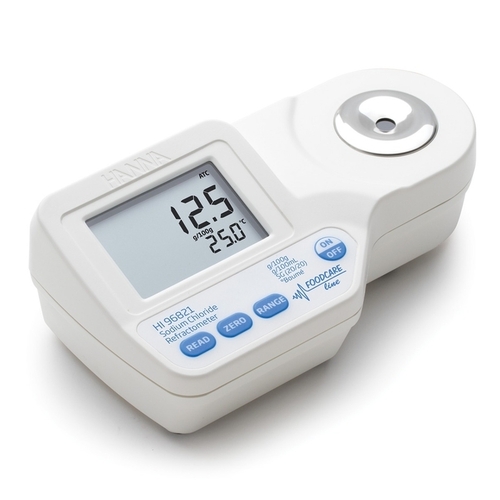

Price:
- 50
- 100
- 200
- 250
- 500
- 1000+

More Products in Digital Refractometer Category
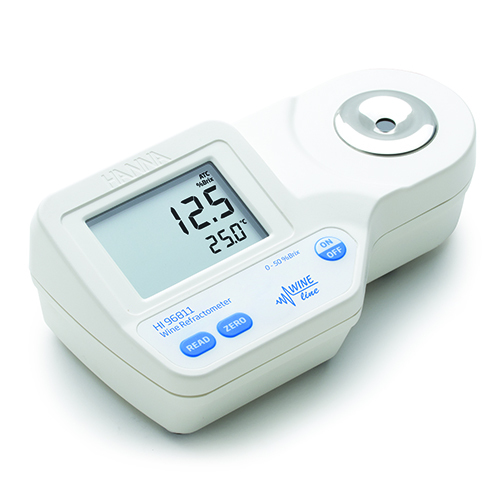
HI96811 Digital Refractometer for Sugar in wine refractometer
Price 31494 INR / Piece
Minimum Order Quantity : 2 Pieces
Material : Mild Steel
Voltage : 220 Volt (v)
Power Supply : Electric
Color : White
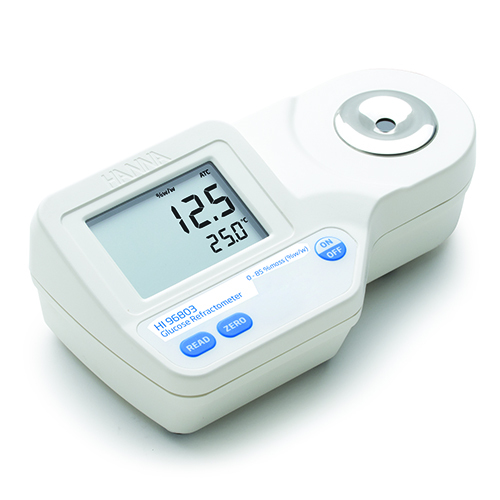
HI96803 Digital Refractometer for Sugar in foods refractometer
Price 31494 INR / Piece
Minimum Order Quantity : 2 Pieces
Material : Mild Steel
Voltage : 220 Volt (v)
Power Supply : Electric
Color : White
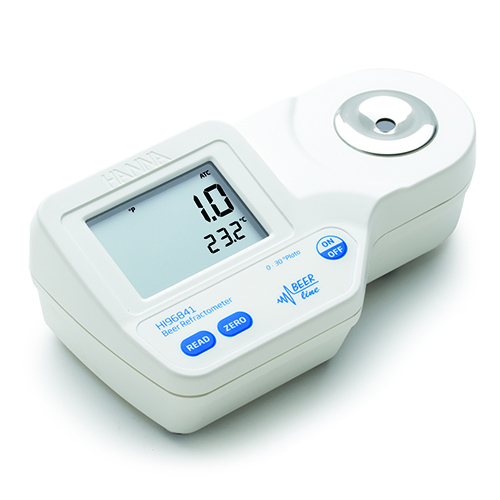
HI96841 Digital Refractometer for for be.er
Minimum Order Quantity : 1 Piece
Material : Mild Steel
Voltage : 220 Volt (v)
Power Supply : Electric
Color : White
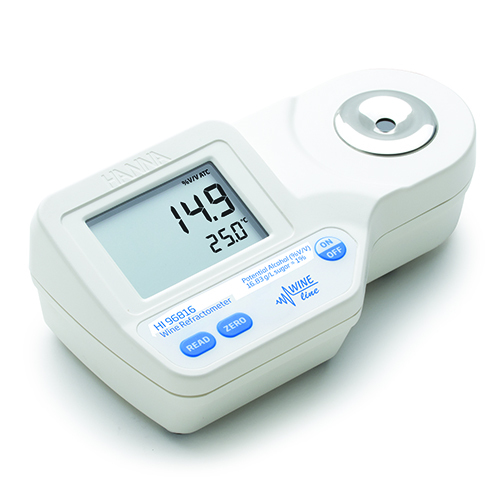
HI96816 Digital Refractometer for Sugar in wine refractometer
Minimum Order Quantity : 1 Piece
Material : Mild Steel
Voltage : 220 Volt (v)
Power Supply : Electric
Color : White

GST : 27AACCH2670Q1Z4

 Send Inquiry





 |
HANNA EQUIPMENTS INDIA PVT. LTD.
All Rights Reserved.(Terms of Use) Developed and Managed by Infocom Network Private Limited. |
